Wraparound Approaches to Learner Support
Why relationships, coordination, and personalized support matter more than ever
Increasingly, organizations across education, employment, and community services are asking an important question:
What does it take to help people not only access programs—but persist, succeed, and achieve their goals?
One promising answer lies in Wraparound: a collaborative approach that brings services, programs and community together to help learners overcome barriers and stay connected to their goals.
Research shows that people are more likely to succeed when they feel connected, supported, and involved in shaping their own goals.
In a landmark review of Wraparound implementation in the United States, researchers found that youth and families involved in Wraparound models experienced improvements in school attendance, emotional well-being, community participation, and long-term stability compared to traditional service approaches.
Since then, Wraparound approaches have expanded into education, employment, justice, and community services because they help people navigate barriers while building confidence, stability, and independence.
Closer to home, community organizations across Ontario are adapting these principles to support adult learners and individuals navigating transitions related to education, employment, housing, mental health, and social connection.
 What is “Wraparound”?
 What is “Wraparound”?
At its core, Wraparound is a way of working with people.
Rather than expecting people to navigate multiple programs and services on their own, Wraparound brings together a coordinated “circle of support” that may include educators, employment specialists, family members, community organizations, mental health supports, peers, and mentors.
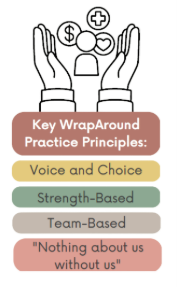
Key principles include:
- Building on strengths rather than deficits
- Creating unique plans based on personal goals
- Coaching around problem-solving and addressing barriers holistically
This approach recognizes something many Get SET practitioners already know intuitively: people are more likely to persist in learning when they feel seen, supported, and connected.
Stories From the Field
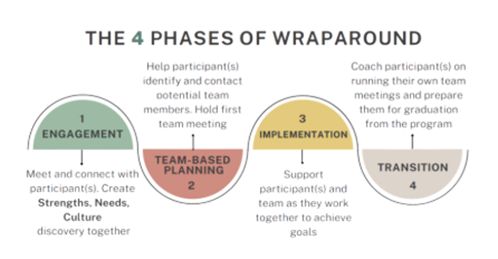
In the Niagara region of Ontario, Learning Link and community partners have been exploring Wraparound-informed approaches through initiatives that support adults facing multiple barriers to learning and employment.
Through coaching and coordinated circles of support, participants have pursued goals ranging from returning to school and securing employment to improving mental health, rebuilding confidence, and reconnecting socially.
One participant entered a Wraparound process feeling isolated and uncertain about their future. Within just a few months of coaching, coordination among community supports, and encouragement from their circle, they gradually rebuilt confidence, and enrolled in a college program (an educational opportunity they had previously dismissed as impossible).
Another participant who had struggled with employment instability and anxiety was connected to coordinated supports that helped address transportation, career planning, and emotional wellness simultaneously. With consistent encouragement and practical supports in place, they secured meaningful employment and continued setting new goals for personal growth.
Practitioners involved in this work often say that the biggest change is not just what learners accomplish—it is the shift in self-belief.
Learners begin to see themselves differently.
They start advocating for themselves, imagining new possibilities, and recognizing their own strengths and capacity.
Learning from Wrap Canada
Organizations like Wrap Canada have also helped strengthen awareness and implementation of Wraparound practices across Canadian communities.
Their work emphasizes that effective support is built through collaboration, cultural responsiveness, and long-term relationship-building—not one-size-fits-all interventions.
Wrap Canada highlights how Wraparound approaches can improve outcomes for individuals facing complex barriers by helping communities coordinate supports more intentionally and compassionately.
Importantly, Wraparound is not about “fixing” people.
It is about creating conditions where people can thrive.
A Shift from Services to Systems of Support
As Ontario faces workforce shifts, affordability pressures, and growing needs for mental health, there is increasing recognition that learner success requires more connected systems of support.
This has important implications for educators, employment practitioners, literacy organizations, and community partners alike.
The Wraparound approach invites us to ask:
- What happens when we stop expecting people to navigate systems alone?
- What becomes possible when programs, services, and key actors like employers work together more intentionally?
- How might learning and employment outcomes improve if relationships were treated as essential infrastructure?
These questions matter because foundational skills development is deeply connected to confidence, belonging, and access to coordinated support.
And perhaps most importantly, Wraparound approaches remind us that success is rarely achieved in isolation.
Because when learners are surrounded by the right people, partnerships, and supports, success becomes something communities build together.
Learn more:
- National Wraparound Initiative
- Bruns, E. J., & Walker, J. S. (2010). The Resource Guide to Wraparound. National Wraparound Initiative, Research and Training Center for Family Support and Children’s Mental Health, Portland State University.
- Wrap Canada
- Learning Link Common Frontline Resource Site
Contributor: Rachel Crane, Executive Director at Learning Link